
Latest

-
In partnership with Augment Code
The engineer’s guide to building a software factory
Build loops, not just agents.
-
 In partnership with Harness
Unlocking ROI through development, release, and experimentation velocity
Learn how faster, more reliable delivery pipelines can unlock experimentation ROI, improve release confidence, and drive compounding gains across teams.
Editor’s picks
The quickly evolving role of QA
In fast-paced software development environments, the way you think about quality assurance needs to change.
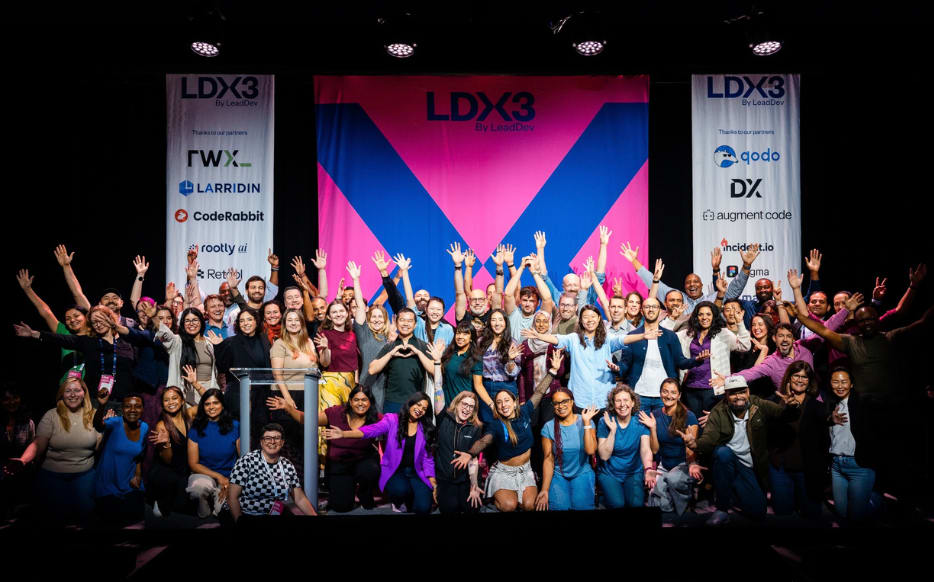
New York • September 8 & 9, 2027
Loved LDX3 New York? Pre-sale tickets for 2027 are now available.
Essential reading

How to bake quality into your teams’ coding process
Taking code quality beyond documentation and into the fabric of your team’s work.
On our Software Quality playlist

Ways your teams can (realistically) prioritize code quality
Code matters – learn how to create a culture of quality in your organisation

Using clinical science to effectively tackle code review anxiety
Uncover the science behind code review anxiety, its cognitive triggers, and actionable strategies to reduce anxiety, fostering a healthier code review culture for all developers.

A guide to creating a great code documentation culture
If your teams are struggling with code documentation, watch this on-demand webinar, where our panel of engineering leaders will discuss best practices and strategies to get started. Code documentation is often viewed as a necessary evil by development teams. There’s no doubt that mastering the art…

Building a better testing culture
How can engineering leaders create a healthy testing culture with clear strategies in place?

Take back control of code quality
In this talk, Joel Chippindale shares stories from his experiences in leading engineering teams that illustrate the dynamics between team members and with stakeholders that lead teams to lose control of code quality.


The festival for modern engineering leadership
New York • September 15 & 16, 2026
More about Software Quality
-
Leveling up your machine learning product by taking the leap to third-party
A journey of build vs. buy
-
Addressing the challenges of build vs. buy
Discussions on reaching a decision that is right for your organization.
-
The search for the best solution: third party or open source?
What does the journey look like when you’ve decided to buy?
-
140,000 lines of code: why we built our own licensing system
Exploring the tug of war between build and buy
-
Utilizing invisible forces to make better decisions in software design
How our psychology affects our decision-making
Top Software Quality Videos
-

Strategies for making impossible decisions
Being faced with an important choice that feels impossible to know the answer to is stressful! This comes up a lot when making business decisions, but also applies to technical choices (e.g. “should my company run 100% on AWS” or “is serverless a fad or a great idea?”).
-

Writing effective technical documentation
Documentation can make a big difference. Internal documentation can speed your team up and makes it easier for new engineers to get up and running. External documentation reduces time spent on support questions, and makes your product more usable.
-
Introduction to functional programming
Expressions are the most basic form of human interaction! Programming languages are trending more towards using expressions rather than procedural statements, adopting the declarative paradigm.
-
The benefits of delivering imperfect software
We all want to deploy the best software possible to delight our customers and please our product owners. There’s always one more feature, another performance improvement, and code we just wish we wrote better.
-

The possibility of AI-powered Javascript apps
There are many exciting things happening with AI, from which, until recently, JavaScript developers were largely shut out. But things are changing, if you can do `npm install @tensorflow/tfjs` or make an API call, you can now do AI.
-

Identifying and articulating the role of AI in your software design process
We’ve all read the articles and got excited by technologies such as machine learning, deep learning, Tensorflow, Panda and NumPy. A lot of us are also looking at how to incorporate these technologies into our toolset and in the software we are building.
-

Rejecting the black box: examining the implications and practicalities of testing AI
There’s a lot of talk nowadays about the impact that artificial intelligence (AI) will have on testing. There’s a new generation of testing tools being developed that employ AI with promises of making testing much more efficient for us.
-

Navigating front-end architecture like a Neopian
Over the past few years, I’ve gained expertise in front-end web architecture. I’ve done this work at Indiegogo, Headspace, for my open source mental health project if-me.org, and in my current role at Mailchimp.