This is your last article that you can read this month before you need to register a free LeadDev.com account.
Estimated reading time: 5 minutes
Key takeaways:
- AI is keeping engineers at their desks longer, not freeing them up. Random rewards, dopamine hits, and no natural stopping points create a loop comparable to casino gambling.
- The burnout is real and accelerating. Nearly half of engineers feel emotionally drained weekly.
- The fix is deliberate habits, not restricted tools. Time-box sessions, separate exploration from execution, and treat recovery as maintenance.
AI coding was supposed to give engineers their time back. Instead, LeadDev’s Engineering Leadership Report 2026 found many are working longer hours than before.
The report found that 45% of respondents report working more hours per week than this time last year. This is up from 38% in 2025. The biggest increase was among advanced engineers (staff, principal, distinguished), 53% in 2026 compared to 28% in 2025. This runs counter to the dominant narrative that AI will ‘free up’ engineer time.
Developer and blogger Steve Yegge is a supporter of the notion that AI is a 10x productivity booster. However, he admits that the “AI Vampire” effect of AI has him working outside of his normal hours.
In February 2026, he wrote that AI-powered coding is so “genuinely addictive” that he suddenly crashes and falls asleep after long vibe coding sessions, and that he regrets contributing towards setting unrealistic standards for the industry.
The ‘AI vampire’ is a term that refers to an engineer whose working habits, time, and mental energy are consumed by the hyper-productive nature of AI-coding assistants and agents.
“The AIs can be like sirens, and can woo you into staying at your computer longer than you should,” Yegge tells LeadDev.
Your inbox, upgraded.
Receive weekly engineering insights to level up your leadership approach.
AI slot machines
LeadDev asked the industry to share their sentiments on whether developers are working longer hours because AI-powered coding has become addictive.
One LinkedIn commenter said: “Part of it is addiction – the dopamine hits some people get from thinking they’re being productive by prompting. For those people, AI just becomes a slot machine. They put in tokens, hoping to hit the jackpot, and when they don’t, they put in more tokens and hope again. As they keep going, they get little wins here and there that give them false hope, but they ultimately suffer bigger losses and put in more tokens to try to win back what they lost.”
However, it is not just the wins that are addictive. “When something good happens, you get dopamine. When something bad happens, you get adrenaline,” says Yegge. “With AI, good and bad things tend to both be happening at a very high speed. So your brain is getting a chemical bath while you vibe code. You’re getting random rewards every time you prompt the AI, which has been shown to be insanely addictive, comparable to casinos.”
Both AI-coding and gambling involve intermittent rewards. Understanding the Psychology of Gambling: Findings from a Decade of Research shows that unpredictable rewards can strongly motivate repeated behavior. AI-coding tools create a similar pattern – most prompts are routine, some fail, and occasionally one produces an unexpectedly valuable result. That uncertainty can encourage users to keep prompting in search of the next breakthrough.
Addictive burnout
However, once the dopamine wears off, developers are being met with burn out.
Nearly half of software engineers (49%) feel emotionally drained at work at least once a week, up from 39% in 2025, with similar numbers reported across engineering managers (48%) and managers of managers (46%).
CTOs show the most dramatic shift: 54% report feeling emotionally drained from their work at least once a week, compared to just 24% in 2025. This represents a 30-percentage-point increase in a single year.
“CTOs are burning out because AI has given teams virtually infinite capacity, creating relentless pressure to write highly detailed product specs to ‘feed the beast,’” Thomas Johnson, CTO at Multiplayer, says in the report.
Researchers at University of California, Berkeley found that AI’s promised productivity gains often lead enthusiastic users to take on more work, work faster, and multitask excessively.
However, as AI makes “doing more” feel achievable, users may end up overextending themselves.
“It would seem that we are addicted to a new drug, and we don’t understand all of its effects yet.” Yegge writes. One of them is “massive fatigue, every day,” he adds,
This is because AI removes the built-in stopping points of traditional coding such as hitting a wall, waiting on a review, or simply running out of steam, Rebecca Koniahgari, technical lead atAT uptrend motion LLC and founder of BRYGE AI, tells LeadDev.
“Every problem has an immediate next step so the session just keeps going until you make a conscious decision to stop. That decision gets harder the more progress you’re seeing. When that pattern repeats day after day, that’s not productivity. That’s the setup for burnout,” she explains.
More like this
Healthy AI coding practices
To manage the AI vampire effect, leaders should focus less on restricting tools and more on supporting people and healthy workflows.
Koniahgari argues that effective AI use requires deliberate boundaries. She recommends users “time-box your sessions,” setting both a clear goal and a hard end time before opening AI tools. The AI will never decide when a session is complete, so users must establish their own stopping points, she notes.
She also emphasises the importance of separating exploration from execution. In her view, exploration involves “rabbit holes, testing ideas, and seeing what’s possible,” while execution is about “shipping.” Mixing the two can be costly: “that’s where we lose three hours and end up with nothing merged.”
Finally, Koniahgari highlights the importance of sustainability, urging users to protect their capacity to continue working through “sleep, hard stops, and actual recovery” – not as a wellness practice, but as maintenance.
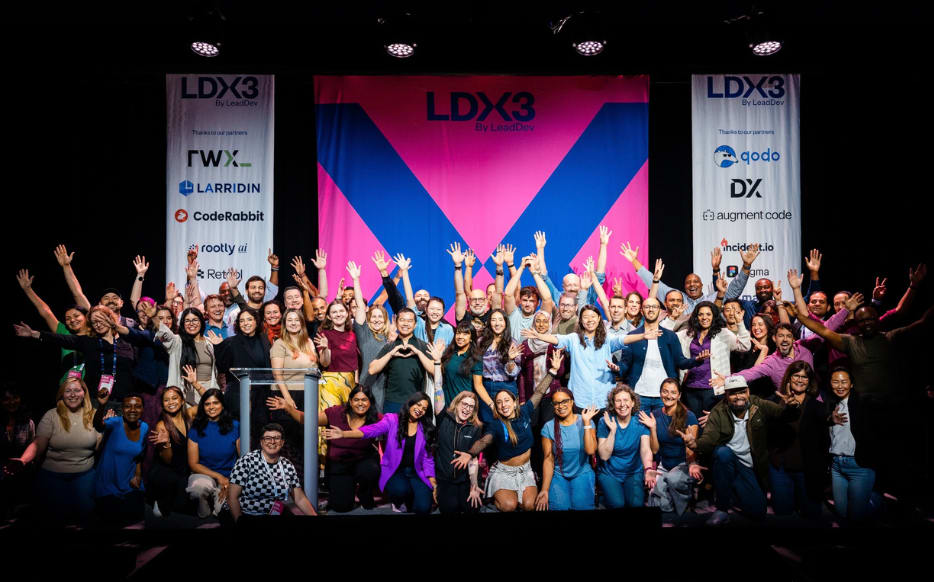
New York • September 8 & 9, 2027
Loved LDX3 New York? Pre-sale tickets for 2027 are now available.
Training is key
Yegge suggests that healthy AI use begins with training, as AI proficiency is not something users acquire automatically. Most people go through a lengthy period of experimentation, often developing ineffective practices before discovering what works. He cites his own experience, noting that it took him about a year to become genuinely proficient.
“Training is a critical first step, and there are different skill levels or cohorts – you have basic or beginner training, which perhaps gets you using a single agent synchronously throughout the day. Then, maybe a few weeks or months later, users will start needing more advanced training with multi-agent frameworks,” he explains.
Once users have developed the skills to work effectively with AI, they can begin building their own AI-assisted workflows.
Yegge emphasises that “one size does not fit all” – some users rely on an AI “chief of staff, others on agent teams, while some prefer tightly scoped tasks or extensive context. The key takeaway is that AI workflows are highly personal and continue to evolve through experimentation
“I think ‘healthy’ has a lot of different shapes right now. Instead of prescribing a particular healthy workflow, we’re at the stage where it’s better to focus on helping people avoid antipatterns,” Yegge concludes.